

I saw a comment the other day that made me smile.
Someone replied to a reel I posted with:
“What if I drink water with coffee granules in it before having my coffee? Does that count?”
It was a joke, of course. But it did something useful.
It made me realise how many of us drink coffee every morning without ever thinking about how coffee affects the body, or why that first glass of water seems to make such a difference.
It’s one of those things we hear, we accept, we repeat…
but we never actually learn the reason behind it.
How Coffee Affects the Body Begins Inside Your Morning Routine
The way your body handles coffee has a lot to do with what state it’s in when that first sip arrives. Overnight, your system loses fluid through breathing, sweating, and basic repair work. Minerals shift, hormones rise, and the nervous system is still settling from sleep. Your body wakes up in a slightly dehydrated and sensitive state, even if you feel fine.
Caffeine lands differently depending on this baseline. A dry system reacts faster and harder. A hydrated system absorbs the same coffee in a calmer way. That’s why some mornings feel smooth and others feel sharp or jittery. It is not the coffee changing. It is the condition of your body at the moment the caffeine hits.
When you drink water first, you refill the fluid your body used overnight. Blood volume improves, mineral levels steady, and digestion wakes up gently. This gives the nervous system a more stable foundation. From there, the rest of the effects of coffee make more sense, because they build on whatever state you begin the morning with.
What Coffee Actually Is (And Why It Matters)

Coffee is not just “a drink”.
It’s a chemical mixture built from hundreds of compounds. These compounds influence the nervous system, digestion, hormones, minerals, energy, and hydration.
A few key elements explain most of the effects:
Caffeine
A natural stimulant that blocks the sleep chemical adenosine.
Polyphenols
Antioxidants that support the liver and overall cellular defence.
Acids
Which can stimulate digestion but also irritate some people’s stomach lining.
Oils
Which influence metabolism and the way coffee feels in the gut.
Understanding what’s inside the cup makes it easier to understand every effect that follows.
Adenosine Blocking: The First Domino
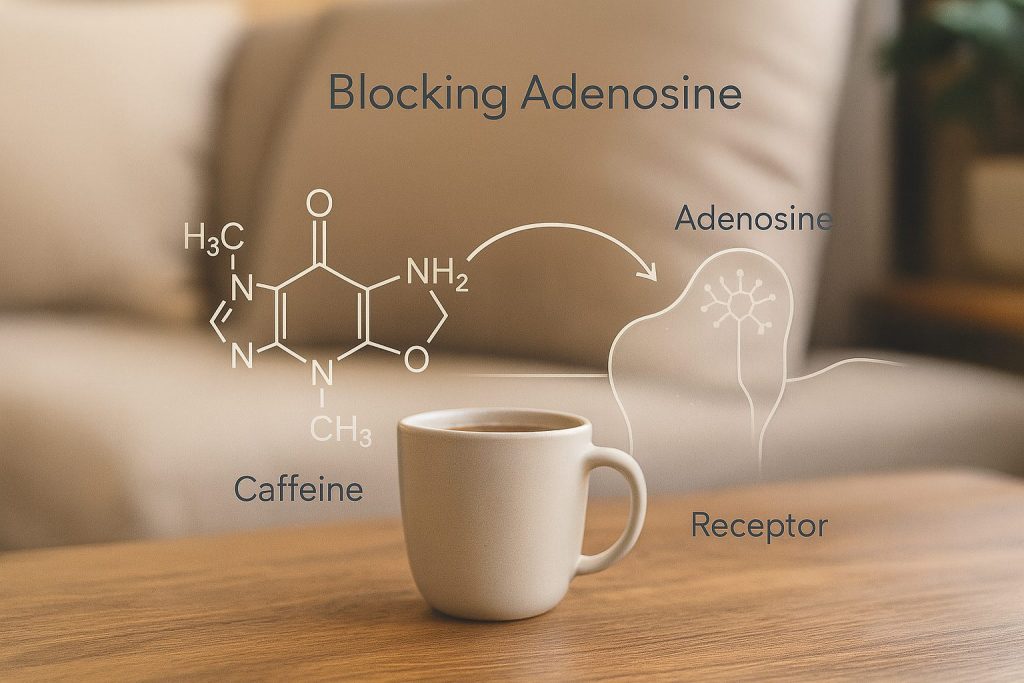
Adenosine is a neurotransmitter that quietly builds up throughout the day.
It creates a feeling of pressure behind the eyes, heaviness in the limbs, and a general “ready to rest” sensation.
Caffeine fits into the same receptors that adenosine uses.
When caffeine arrives first, it takes the parking spaces, and adenosine is left waiting outside.
Your brain reads this as:
- more alert
- more awake
- more focused
But here’s the part most people never hear:
Adenosine doesn’t disappear.
It stacks up in the background until the caffeine wears off… which is why the crash can hit so suddenly.
A clean start to the day depends on the state of those receptors — and hydration makes a difference to how harsh or smooth this whole process feels.
Cortisol, Timing, and Why the First Cup Hits So Hard

Cortisol rises naturally every morning.
It’s not a “stress hormone” in the negative sense — it’s part of your hormonal wake-up routine.
When you drink coffee during that natural rise, caffeine amplifies the effect.
This can feel like:
- shaky energy
- wired alertness
- anxious thoughts
- a “revved” feeling
- heat in the chest
- being switched on too fast
When you hydrate first, the same cup of coffee will still stimulate you, but it lands on a more stable foundation.
Minerals, Hydration, and the Hidden Cost of Coffee

Coffee affects your fluid balance.
Not in a dramatic “dehydration” way — that’s a myth — but it does increase fluid output and mineral use.
Magnesium (Mg)
Used heavily during nervous system activation. Low magnesium makes caffeine feel harsher.
Sodium and Potassium (Na & K)
These govern fluid shifts inside and outside your cells.
Calcium (Ca)
Coffee increases calcium excretion slightly, which is why pairing magnesium and vitamin K2 in your general daily routine helps.
Water Loss
Even small fluid shifts make the heart, kidneys, and brain work harder.
Drinking water first reduces the workload and steadies the nervous system.
Hydration isn’t a slogan here.
It’s a genuine physiological buffer.
Digestion, Acidity, and Why Coffee Can Feel Rough on an Empty Stomach

Coffee stimulates the stomach lining to release acid.
This can be helpful for digestion, but it can also be uncomfortable if the stomach is dry or empty.
Hydration supports:
- mucous lining
- enzyme release
- stomach movement
- dilution of the acids
- better tolerance overall
Some people find that drinking water before coffee reduces nausea or that “tight stomach” feeling.
Others simply feel less jittery.
Dopamine, Mood, and the Mental “Lift”

Caffeine encourages the brain to release dopamine — the neurotransmitter connected to motivation and focus.
This is why coffee feels rewarding.
It gives you a psychological push.
But dopamine also relies on:
- minerals
- hydration
- blood glucose stability
- sleep depth
- circadian rhythm
If any of these are already off, the dopamine hit feels shallow or short-lived.
If your system is steady, the boost feels clean.
Water, again, supports this by helping the nervous system stay balanced.
Energy Borrowing, Not Energy Creating

Here’s the part most people never realise:
Coffee does not create energy.
It releases energy you already have.
It takes your future alertness, pulls it forward, and spends it early.
This is why the crash feels like a mood dip, a drop in concentration, or a wave of “I can’t be bothered”.
If you are even slightly dehydrated, the crash is sharper and recovery takes longer.
Fight-or-Flight Activation

Caffeine encourages the body toward a sympathetic (fight-or-flight) state.
It’s not a bad thing — you need this system — but when it becomes the dominant mode, you can feel:
- restless
- hurried
- reactive
- overstimulated
- easily distracted
Water, minerals, and timing slow the slope of that curve.
You still get the alertness, but you don’t slide into that “wired” state as easily.
Deeper Effects: Minerals, Hormones, Neurotransmitters, Hydration, and the Nervous System Working Together

Caffeine touches almost every major system:
Minerals
Magnesium, sodium, potassium, and calcium shift subtly.
Hormones
Cortisol, adrenaline, insulin, and melatonin all interact.
Neurotransmitters
Adenosine, dopamine, norepinephrine, serotonin — all adjust.
Hydration
Fluid movement increases, shifting electrolytes.
Nervous System
Sympathetic activation rises while parasympathetic calming is delayed.
All of this is manageable, but the smoother your baseline (hydration, minerals, sleep), the smoother coffee feels.
Coffee and MS

For people with MS or other neurological conditions, everything above becomes more pronounced.
Nerves that already fire irregularly become easier to overstimulate.
Small hydration shifts create bigger sensory changes.
Caffeine can push the nervous system too fast, too early.
Water first helps soften this, making coffee easier to tolerate and less likely to trigger those “wired then wiped” sensations.
Why Water First Works So Well

Before anything else happens in the morning, your body is already:
- dehydrated
- mineral-shifted
- hormonally active
- low on stomach fluid
- waking from repair mode
Water:
- raises blood volume
- supports cortisol’s natural curve
- stabilises mineral use
- reduces digestive irritation
- makes caffeine feel smoother
- slows the crash
- takes pressure off the heart and kidneys
Most people notice the difference in 3 to 5 days.
How to Drink Coffee the Smart Way

This part is simple.
You don’t need to give up coffee.
You just need to set your body up so the same cup gives you a steadier, calmer, cleaner lift.
Here are the habits that make the biggest difference.
1. Drink water first
Aim for roughly 500 ml.
This supports hydration, minerals, digestion, and your natural hormonal rhythm.
2. Give your body time to wake up
Most people feel better if they leave 60 to 90 minutes between waking and their first coffee.
It lets cortisol settle naturally.
3. Pair coffee with food if you’re sensitive
A small breakfast or a simple snack stabilises blood sugar and softens acidity.
4. Add magnesium to your daily routine
Magnesium helps your nervous system handle stimulation.
People who feel “jittery” often notice improvement quickly.
5. Stop caffeine early in the afternoon
It protects your sleep pressure — the chemical build-up that helps you fall asleep.
6. Choose your brew based on how you respond
- espresso gives a fast spike
- filter coffee gives a smoother rise
- cold brew has lower acidity
- darker roasts can feel gentler
Small changes help you use coffee, not depend on it.
What About Decaf

Decaf still contains a small amount of caffeine, but it’s far gentler on the nervous system.
It works well for people who want:
- the ritual
- the smell
- the flavour
- the warmth
- the grounding moment
…without the stimulation.
Decaf is especially useful for:
- afternoon coffee
- people sensitive to anxiety
- anyone prone to energy crashes
- poor sleepers
- neurological conditions (MS included)
- those who want the habit without the intensity
You can also create your own “half-caf” blend by mixing regular beans with decaf.
It gives you a more controlled level of stimulation.
A Simple Way to Think About How Coffee Affects the Body
At the end of the day, coffee doesn’t create energy. It changes how your body uses the energy you already have. That’s why the way coffee feels is so different from one morning to the next.
If you start the day dehydrated, low on minerals, and still shaking off sleep, coffee hits you fast. If you start steady, hydrated the same cup feels smoother, clearer, and much easier on the system.
That’s really all “water first” is doing. It gives your body a stable base before the stimulation arrives. Just simple physiology working in your favour.
If you understand how coffee affects the body, you can enjoy it without the jitters, the crash, or the wired feeling. A small shift, a calmer morning and a coffee that actually works with you instead of against you.
Further Reading
If you want to explore the physiology behind this in more depth, these books offer calm, grounded explanations without the hype:
- “Caffeine: How Coffee and Tea Created the Modern World” – Michael Pollan
- “The Magnesium Miracle” – Carolyn Dean
- “Why We Sleep” – Matthew Walker
- “The Cortisol Connection” – Shawn Talbott
- “The Circadian Code” – Satchin Panda
Each adds a layer to understanding how your body responds to the inputs you give it.
Resources
A few tools that support the habits in this article:
- A reusable filtered-water bottle
- High-quality electrolyte mix
- Magnesium glycinate
- A small morning hydration routine
- A gentle breathing pattern to settle the nervous system before coffee
- A simple diary for tracking how coffee feels on different days
Anything that helps you understand your own patterns is useful.
Coffee Equipment
Coffee Beans & Subscriptions
- UK-based coffee subscription services
- Low-acid blends
- Decaf and half-caf options
- Single-origin beans
Supplements That Support Coffee Drinkers
- Magnesium glycinate
- Vitamin K2 MK-7
- Electrolytes
- L-theanine for smoother focus
- Fireblood Supplement
Disclaimer
This article is for education purposes only. It does not diagnose or treat disease. Some product links may earn a small commission at no extra cost to you. Always consult your own healthcare needs before making changes to your routine.
