

Winter isn’t just colder weather. It’s a different physiological environment.
Shorter days, less sunlight, colder temperatures, and less natural movement all change how the body functions. Digestion slows slightly. Recovery takes longer. The nervous system becomes more sensitive to stress.
This is the season where people quietly lose ground without realising it. Not because they stop training. Not because they eat badly. But because they eat out of season.
Winter Nutrition and the Seasonal Shift in the Body
Winter nutrition needs to match winter physiology.
As daylight drops and temperatures fall, the body naturally turns inward. Energy is conserved. Repair and maintenance take priority over output. This isn’t weakness – it’s seasonal intelligence.
When your eating doesn’t reflect this shift, friction builds inside the system. The body has to spend energy warming food before digestion can even begin. That energy is usually taken from recovery, immunity, and resilience.
Why Winter Nutrition Is About Stability, Not Optimisation
Most modern nutrition advice is seasonless. Smoothies in January. Iced drinks all year. Raw salads as a default.
That might work in summer. In winter, it often creates unnecessary stress.
Winter nutrition isn’t about pushing performance. It’s about stability – keeping digestion strong, energy steady, and recovery available.
Trying to force fat loss or extreme discipline through winter can backfire. The environment is already harder on the system. Adding nutritional stress on top of that creates cumulative strain.
Cold Food in Winter Can Create a Slow Energy Leak
Cold inputs don’t usually cause dramatic symptoms. They cause slow leaks.
If you notice bloating, heaviness after meals, flat energy, or slower recovery, it’s easy to blame “gut issues”. But often it’s simpler than that.
In winter, cold food and cold drinks can chill digestion. Over time, that reduces how efficiently you extract energy from food. The result isn’t sudden illness – it’s gradual depletion.

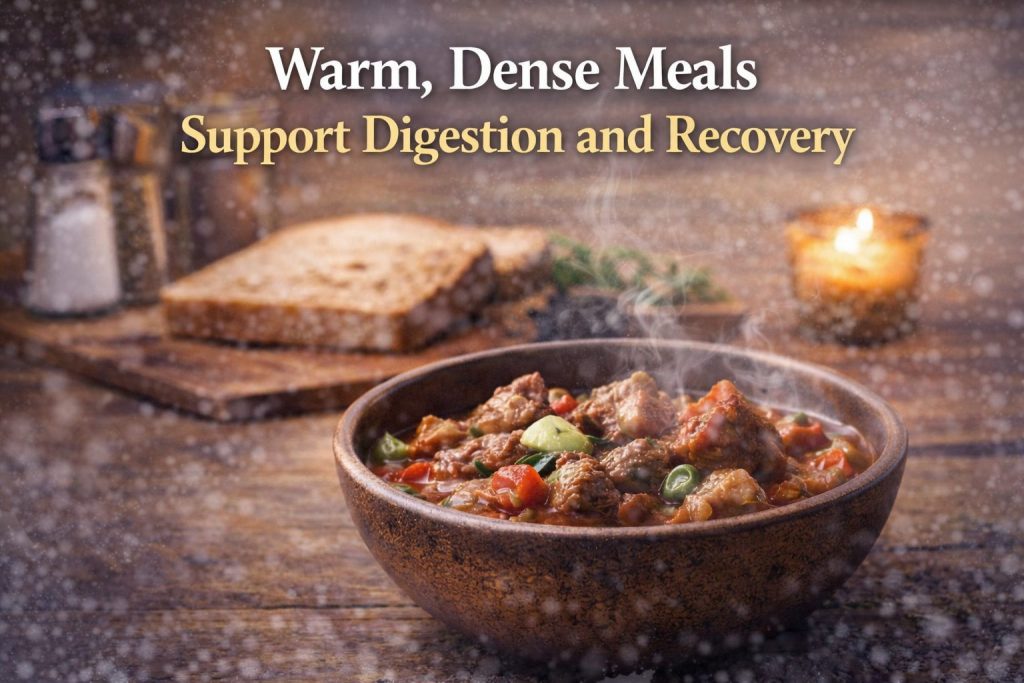
Warm, Dense Meals Support Digestion and Recovery
Warm food works with the body instead of against it.
Slow-cooked meals, soups, stews, roasted root vegetables, and properly cooked meats are often easier to digest and provide steadier energy.
In winter, think of food less as fuel and more as insulation. You’re not trying to maximise output. You’re trying to protect reserves.
Why Winter Nutrition Benefits From Nutrient-Dense Foods
Traditional winter diets weren’t accidental. They were built around density and recovery.
Foods like egg yolks, slow-cooked cuts, red meat, broths, and organ meats support tissue repair, hormones, and immune resilience – the things the body leans on most in winter.
Ultra-lean eating may look clean on paper, but it often lacks the structural support the body needs during colder, darker months.

Warm Drinks and Digestive Strength in Winter
Cold drinks in winter create unnecessary internal conflict. Warm drinks reduce it.
Herbal teas, ginger tea, warm water, and broths can help maintain digestive strength and reduce internal stress.
When digestion stays strong, energy stays available. When energy stays available, recovery improves.
FAQ – Common Winter Nutrition Questions
Is it “bad” to eat salad in winter?
No. But if you feel bloated, cold, or flat, it’s worth switching to warmer meals most of the time and seeing what changes.
Do I need to eat more in winter?
Not always more, but often more warming and more filling. Many people under-eat protein and overall calories in winter without realising.
What’s the simplest winter change I can make?
Stop drinking iced drinks for a couple of weeks and swap one cold meal a day for something warm and slow-cooked.
Winter Nutrition and the Base Layer of Health
Human performance is built in layers. Winter nutrition protects the base layer.
Warm meals. Warm drinks. Dense, nourishing food. Not forever – just for the season you’re in.
Stabilise first. Optimise later.
Appendix
Suggested Book
The Diet Myth by Tim Spector
Why it’s useful: A readable introduction to how food affects the body beyond calories – helpful context when thinking about digestion, resilience, and long-term health.
Suggested Resources
- NHS – Healthy eating basics (for foundational reference)
- British Dietetic Association (BDA) – evidence-based nutrition articles
- Seasonal Nutrition for Human Performance – Playlist on YouTube (Shorts)
Suggested Affiliate Products
- Slow cooker (winter stews, soups, batch cooking)
- Insulated mug / thermos (warm drinks on walks and travel)
- Cast iron casserole dish (oven-based slow cooking)
- Ginger tea / herbal tea sampler (warming drinks)
Disclaimer
This post is for educational purposes only and is not medical advice. If you have a medical condition, digestive symptoms that persist, or concerns about diet changes, speak with a qualified healthcare professional.
Some links in the appendix may be affiliate links, meaning I may earn a small commission if you purchase through them – at no extra cost to you.
